Calculate a switch’s payback before canceling your old service
Compare the cost of staying and switching over the same months, then find when savings first cover setup, overlap, and exit costs.

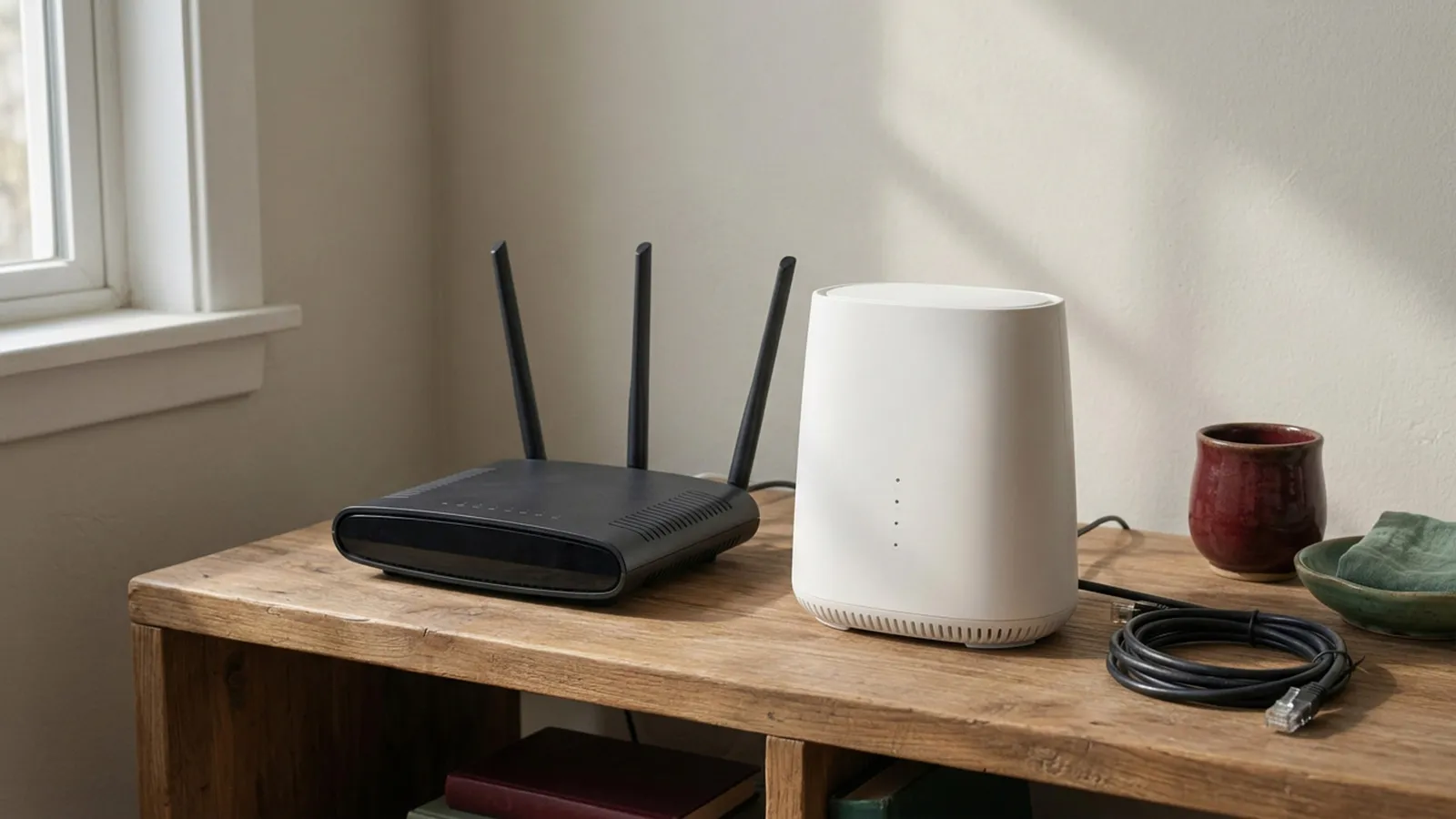
A cheaper monthly rate can take several months to repay the cost of switching. Compare the two paths from the same day and put the extra charges in the month you expect to pay them. Then you can see how long it takes before the switch saves anything.
Get the start and exit costs from different places
Ask the prospective provider for the full recurring price, the date any introductory rate ends, and what it charges to start service. For home internet, the FCC’s broadband label guidance describes price and fee fields that can help you find these details (Federal Communications Commission, checked November 21, 2026). Household Hero’s internet plan comparison walks through comparing the price in each phase.
Ask your current provider for charges tied to the date you’d leave. Check the exit charge, equipment return, and whether you’d pay for the full billing period. Also ask when the last bill or any credit would arrive. Put any period of deliberately overlapping service in the switching column. If you’re keeping internet active until the replacement works, the old service during those days is still part of the switch.
Find the month that pays back the switch
Make a table with one row per billing period and columns for Stay, Switch, and Savings so far. In the stay column, enter the total you would pay your current provider for ongoing service. In the switch column, enter the new bills plus old-service overlap, setup, and exit charges. Put all costs on the same time horizon. If one route bills in advance and another bills later, make sure you’ve counted the cost of service through the same end date.
Subtract the switch amount from the stay amount for each row. Add the difference to the running savings. The first row where savings reach zero or above is the payback point. Keep going through any planned rate change and the time you expect to use the service. A promotion can give you early savings that shrink when the price goes up.
Keep track of which charges you could avoid by waiting to switch. If the old provider says an exit fee falls away next month, make a separate version starting then. Include the cost of keeping the old service during the extra month and check whether the new quote would still be available. Use the same end date for both versions so waiting and switching now cover the same stretch of service.
Illustrative example — Changing home internet providers
Assume both plans meet your needs and the prices shown are your full recurring totals. Staying costs $82 a month. The replacement costs $62 a month. It costs $45 to start, $25 to exit, and $30 for the remaining old service during the switch. All three transition charges land in month one.
| Month | Stay | Switch | Savings so far |
|---|---|---|---|
| 1 | $82 | $162 | −$80 |
| 2 | $82 | $62 | −$60 |
| 3 | $82 | $62 | −$40 |
| 4 | $82 | $62 | −$20 |
| 5 | $82 | $62 | $0 |
| 6 | $82 | $62 | $20 |
The switch costs $100 up front and saves $20 per month against staying. It breaks even at month five and is $20 ahead at month six. Suppose the old provider actually charges $60 for overlap. That adds $30 to the switch and turns the six-month saving into a $10 cost. Verify the final old-service charge before you make the call.
Common questions
Can I divide the up-front cost by the monthly saving?
That works if the saving stays the same and all transition costs are included. Use the monthly table if a rate changes or a credit arrives later.
Should I count a promised credit?
Write down the eligibility conditions and when it’s due. Run the table without the credit as well if it hasn’t been confirmed.
Sources
- Federal Communications Commission. Broadband Consumer Labels Small Entity Compliance Guide. Checked November 21, 2026.